
If you’re planning for retirement on Long Island, understanding why inflation is a retirement risk and how to manage its impact can feel complicated. Costs continue to rise, but income sources in retirement may not keep pace, creating a gap that can affect long-term financial stability.
This article breaks down how inflation eats away at your nest egg, why the impact can be more pronounced on Long Island, and what strategies can help address it.
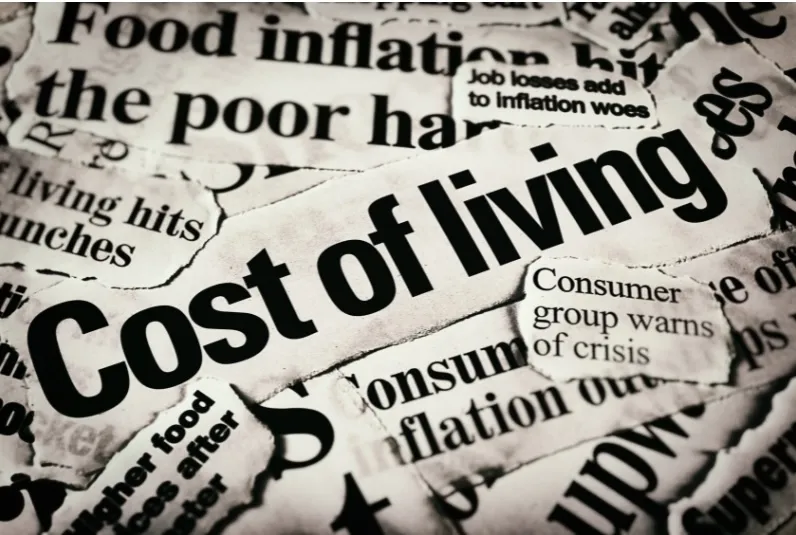
How Inflation Affects Retirement Savings Over Time
Inflation reduces purchasing power gradually, but the long-term effect is significant. Even modest annual increases compound over decades, meaning what seems manageable in the short term can create substantial gaps in retirement resources.
Using the Rule of 72, a widely accepted financial concept, a 3% annual inflation rate doubles prices in roughly 24 years. Over a multi-decade retirement, these cumulative effects can impact everything from daily living costs to discretionary spending, travel, and healthcare planning.
Using that same 3% rate, a $100,000 lifestyle today may require $180,000–$200,000 in 20–25 years to maintain the same standard of living. These numbers illustrate that inflation’s effect is rarely dramatic year to year but becomes substantial over long periods.
Different asset types also respond differently: cash loses value steadily, fixed-income returns may lag behind inflation, and investment gains must be considered in terms of real returns.
A portfolio earning 5% annually during 3% inflation effectively yields only a 2% gain in purchasing power, and over decades, this difference can dramatically affect how long assets can sustain retirement withdrawals.
Why Inflation Hits Retirees Harder Than Pre-Retirees
Inflation presents unique challenges once you transition from earning income to relying on assets.
Many retirees depend on:
- Social Security, which includes cost-of-living adjustments but may not fully match individual expenses
- Pensions, which often lack full inflation adjustments
- Investment withdrawals, which must stretch across decades
At the same time, retirement timelines have lengthened. According to the U.S. Census Bureau, Americans are living longer, increasing the likelihood of 25-to-30-year retirements.
Healthcare costs add another layer. Data from Fidelity Investments shows that a 65-year-old individual may need $172,500 in after-tax savings to cover healthcare expenses in retirement.
How Inflation Impacts Retirees in High-Cost Areas Like Long Island
Inflation doesn’t affect every region equally. On Long Island, baseline costs are already higher than national averages, which can amplify the impact.
Key local cost pressures include:
- Property taxes are among the highest in the country
- Housing costs, which remain elevated compared to many other regions
- Insurance and utilities, which can fluctuate with regional factors
For a retiree on Long Island, maintaining the same lifestyle often requires a higher income than in lower-cost areas. This makes it vital to protect your retirement from inflation by accounting for these local price hikes in your long-term projections.
Consider two retirees with identical savings:
- One lives on Long Island.
- One relocates to a lower-cost region.
Even with the same portfolio, the Long Island resident may face:
- Higher fixed expenses
- Less flexibility to adjust spending
- Greater exposure to rising costs
Downsizing, often viewed as a solution, doesn’t always provide significant relief given the region’s high baseline housing prices.
This makes location-specific financial planning especially important.
Sequence-of-Inflation Risk and Market Timing
Sequence-of-returns risk is widely discussed in retirement planning. However, sequence-of-inflation risk adds another layer.
It occurs when inflation rises early in retirement, before the portfolio has had time to grow. The same inflation rate arriving later in retirement does far less damage. Withdrawals increase to maintain purchasing power, and when markets are weak or volatile, the pressure compounds.
Example:
- A retiree withdraws $80,000 annually.
- Inflation pushes expenses to $90,000 within a few years.
- Markets decline during the same period.
The result:
- Larger withdrawals from a declining portfolio
- Reduced the ability of the portfolio to recover
This dynamic highlights the importance of planning before retirement begins, rather than reacting after conditions change.
Inflation-Proof Retirement Strategies to Safeguard Retirement from Inflation
Addressing inflation requires a combination of investment, income, and tax strategies, including:
- Diversified investment strategy: Portfolios that include growth-oriented assets, such as equities, have historically outpaced inflation over long periods. According to data compiled by Kiplinger, equities have provided higher real returns than cash and bonds over time.
- Treasury Inflation-Protected Securities (TIPS): TIPS are designed to adjust with inflation. The principal value increases with inflation and decreases with deflation, as explained by the U.S. Department of the Treasury.
- Social Security timing: Delaying Social Security benefits increases monthly income. The Social Security Administration notes that benefits can increase by roughly 8% per year for each year delayed past full retirement age.
- Flexible withdrawal strategies: Adjusting withdrawals based on market and inflation conditions can reduce long-term strain. This approach avoids drawing down assets too aggressively during unfavorable periods.
- Income layering: Combining sources of assured income, portfolio withdrawals, and supplemental income streams can help manage variability in both markets and inflation.
- Tax-aware planning: Inflation can gradually push retirees into higher tax brackets, particularly when required minimum distributions begin. Coordinating withdrawals across account types can help manage this effect.
Building a Plan That Accounts for Inflation
A retirement plan should reflect more than current balances; it should model future conditions.
This includes:
- Inflation-adjusted projections
- Scenario testing, including higher-than-average inflation periods
- Regular reviews, especially during economic shifts
Effective financial planning often involves coordinating:
- Investment management
- Tax planning
- Income distribution strategies
This coordination helps maintain alignment as conditions evolve.
Common Mistakes to Avoid When Planning for Inflation
Several planning gaps may increase exposure to inflation:
- Assuming inflation remains low
- Holding excessive cash or low-yield assets
- Overlooking healthcare cost increases
- Using fixed withdrawal strategies without adjustment
- Failing to revisit the plan regularly
- Focusing solely on nominal returns instead of real returns
Each of these can reduce a portfolio’s ability to adapt over time.
Inflation develops gradually, but its long-term effect on retirement is measurable. When combined with longevity and ongoing withdrawals, it becomes a central factor in retirement planning.
Recognizing how rising prices can affect retirement helps inform decisions around income, investments, and long-term strategy, particularly for those living on Long Island, where costs are already elevated.
Take Steps to Safeguard Your Retirement From Inflation
If you’re thinking about how to safeguard your retirement from inflation, this is a practical time to review how your current plan accounts for rising costs.
Evaluating your income strategy, investment allocation, and long-term assumptions can highlight areas for adjustment. For Long Island residents managing higher living expenses, these details can play a meaningful role.
Are you planning for retirement on Long Island and want to understand how inflation could affect your long-term income? At Investment Insight Wealth Management, helping clients navigate the inflation-related retirement risks that Long Island residents often face is a core part of what our team does. If you’d like a second opinion on your retirement strategy, call (516) 249-0060 or email hello@myinvestmentinsight.com.
Frequently Asked Questions About Why Inflation Is a Retirement Risk on Long Island
1. Is inflation a risk to a retirement portfolio?
Yes, inflation risk is a major concern for a retirement portfolio because it progressively erodes purchasing power. At 3% inflation, costs can double in about 24 years (U.S. SEC Rule of 72).
This often translates to:
- Fixed withdrawals buy less each year
- Real returns shrink if investments don’t outpace inflation
- Long retirements face compounding cost pressure
From an advisor’s perspective, this is one of the most common gaps in retirement plans. Everything may look solid today, but without factoring in rising costs, the long-term picture can shift more than expected.
2. Why is inflation especially risky for retired people?
Inflation is riskier for retirees because income sources are often fixed while expenses continue rising. Here are the key factors to consider:
- Limited income growth: Social Security COLAs may not match real expenses (SSA)
- Long timelines: 25–30 year retirements (U.S. Census Bureau)
- Healthcare costs: ~$345,000 for a retired couple
These constraints reduce flexibility to adapt. In practice, this often means retirees need to be more deliberate with how income is drawn and adjusted over time, rather than relying on a static plan.
3. Does retirement income adjust for inflation?
Retirement income adjusts partially for inflation, but not fully. Social Security includes cost-of-living adjustments (COLAs), but they may not reflect individual spending patterns.
Other (potential) income sources:
- Pensions: Often fixed or partially adjusted
- Investments: Depend on market performance
- Withdrawals: Must increase to keep pace with rising costs
This is where planning becomes more nuanced. A professionally designed plan balances current income needs with the reality that withdrawals may need to increase later, while still preserving long-term sustainability.
4. How does inflation affect estate planning and leaving a legacy?
Inflation can reduce the real value of assets left to heirs or charitable organizations. Even if a retiree maintains the same nominal portfolio value, rising costs over decades may mean that the purchasing power of those assets is significantly lower at the time of inheritance.
What this really comes down to:
- Adjusting bequests for inflation: Planning for future spending power helps intended gifts maintain their real value over time
- Using inflation-sensitive trusts or accounts: Certain trust structures can include provisions for inflation adjustments to maintain real value
- Coordinating withdrawals and distributions: Strategic timing can help preserve assets for heirs while meeting current retirement needs
When these factors are considered early, it becomes easier to align long-term intentions with what those assets may realistically provide in the future.
5. What did Warren Buffett say about inflation?
Warren Buffett has said, “Inflation swindles the bond investor… it swindles the person who keeps their cash under their mattress, it swindles almost everybody,” meaning it erodes real returns even when investments grow. He emphasized that:
- Businesses with pricing power tend to handle inflation better
- Fixed-income assets are more vulnerable
This perspective reinforces a broader point in retirement planning: growth alone isn’t enough if purchasing power is declining at the same time.
6. How can working with a financial advisor help address inflation risk?
Inflation affects more than just investment returns. It influences income strategy, tax planning, and how long a portfolio can support withdrawals.
Working with a firm like Investment Insight Wealth Management can help connect these moving parts. Advisors can model different inflation scenarios, adjust withdrawal strategies over time, and position a portfolio to better align with long-term income needs, particularly in a higher-cost area like Long Island.